Now what if we want to add something more useful for home automation?  pic.twitter.com/mGy7wDUVE5. The MQTT topic subscribed to receive state updates. Basically I have a relay which is controlling a fan. Now that you have the config file, we can compile it and flash the device (you might need to be in the dialout group). Defines a template to extract devices availability from the availability_topic. Everything with your device revolves around your devices YAML config file, including configuration, flashing, accessing logs, clearing out MQTT messages and more. I went straight to Mosquito because I simply demand that nothing ever be easy. So it just automatically published messages for states using the topic you set? To determine the devicess availability result of this template will be compared to payload_available and payload_not_available.
  Was that the fundamental change, or did I miss something? Now need to add the new platform devices to that same section (dont create a second switch entry). In this mode, the switch will immediately change state after every command. Thanks! From the switch component documentation page: internal (Optional, boolean): Mark this component as internal. This switch triggers the air freshener to spray and is reset before ESPHome sends the device to sleep again. I could be wrong, but I don't think that the default ESPHome integration (which I have got to work) uses MQTT. Problem-relevant YAML-configuration entries: Additional information and things you've tried: Seems like generated code is not calling MQTTSwitchComponent::setup() To determine the switchess state result of this template will be compared to state_on and state_off. As a final note, if you need to override something from PlatformIO, for example specifying a specific version of a dependency, you can do that by creating a modified platformio.ini file in your configs dir (copy from one of your build dirs and modify as needed). Finally, we set the class of the device to motion which will set the appropriate icon in Home Assistant. Do you know how you would go about tying the fate/state of two switches together? Simply add this to the bottom of your YAML file. The unit provides some control over the frequency the air freshener sprays but this is limited to 9, 18 and 36-minute intervals. This is how you can link multiple components together on the device, then present a single device to Home Assistant (like garage remote below). Sign in The type/class of the switch to set the icon in the frontend. The relay control pin is connected to our ESP32 on GPIO pin 22. I strongly recommend that if you havent explored Home Assistant, ESPHome or ESP32 NodeMcu for tinkering you give them a try. Go ahead and toggle the switch while still tailing the log of the device and you should see it restart. As Ive written about previously, the smart side of my home automation is managed by Home Assistant, which is an amazing, privacy focused open source platform. If you want to make this visible on the main Overview dashboard, you can do so by selecting ADD TO LOVELACE.
  One thing thats useful to know is that platform devices with the name property set in the config will appear in Home Assistant. I don't see any "publish.mqtt" in there. Proudly powered by. I am grounding GPIO4 with the pull-up resistor, to activate the switch, but I can't figure out how to trigger an MQTT publish when the switch changes states (i.e. For those situations, Ill leave you with this. Cool, no worries Let me know if what you end up working on and if you need a hand. This is used to show device topology in Home Assistant.
  Valid entries are all, any, and latest. Hey Bob, yes, I definitely do want to replace it at some point and Ive also been looking at a few different platforms.
  So while Ive made a few jokes in this article and had lots of fun along the way, the point I want you to take away is that ideas can become reality.
  In the office, if my workstation is unlocked then I am likely working and the room is in-use. The config file contains different sections with core settings.
  Why these intervals I dont know but Im sure Airwick have their reason. The payload that represents the off state. Therefore, specifying the exact device is good and can be helpful, but its not strictly necessary. Nice one Chris, cool post. Its much safer to start your IoT device with no wifi secret and start it as AP and register it on your wifi once. Thus, you can use Home Assistant to set up scripts and react to things that happen. The second Git repo has all of my device configs and references the secrets file from the other repo. If not, you can tell esphome to tail the log by running esphome example.yaml logs. If you actually cabled this up and toggled the button in Home Assistant, the UI button turn on and you would hear the relay click on, then off, then the UI button would go back to the off state. Certainly, if ha had turned sprinklers on, expect an exorbitant water bill. However, the vast majority of my home automation devices are ESP modules running open source firmware which connect to MQTT as the central protocol.
  If specified, will be used for both comparing to the value in the state_topic (see value_template and state_on for details) and sending as on command to the command_topic. Sorry, your blog cannot share posts by email. Weve all most likely been into a public restroom somewhere and had the automatic air freshener trigger and possibly even make us jump out of our skin when it does. Make sure that your topic matches exactly. To provide me with the compute for this IoT project I turned to my trusted and favourite ESP32 NodeMcu board flashed with ESPHome. This is entirely wasteful and not very smart. Read about what #Geek James does that isnt #SharePoint or #Office365 related, such as #Cooking, #Photography #HomeAutomation and #IoT. When you were using ESPHome, did you have all of your logic in Home Assistant? The look and feel could not be compromised. To determine the devicess availability result of this template will be compared to payload_available and payload_not_available. A link to the webpage that can manage the configuration of this device. Thats it! When the motor is no longer powered the gearing reverses from the return force of the nozzle of the can of compressed air freshener. The terminal should now be automatically tailing the log of the device (we enabled logger in the config). The above example shows the new and modern way,
  For hass, its nothing too complex, just a deployment, replicaset and service in a namespace with an ingress. The maximum QoS level of the state topic. Wow I had no idea we had this easy a framework for HomeAssistant to make ESP32 devices work easier. In general its not advised to store any form of credentials on external services such as github. One thing I have noticed with Alexa routines is that Ive always had to keep the wake sentences short and not complex in order for them to be picked up by Alexa. In this example, the topics are prefixed with home. Lets create the Git repo and secrets file, replacing the details below with your own. When using MQTT, the channels are set with retain flag, so that the devices themselves and their last known states are not lost on reboots (you can disable this for testing). Id like to link the LED and the fan together so that the LED ALWAYS correctly shows the state of the fan. I THINK the .yaml in HA is sound, but not 100% about that either. Can be either an HTTP or HTTPS link. The MQTT topic subscribed to receive a JSON dictionary payload and then set as sensor attributes. Must not be used together with availability_topic. Ive likely fallen asleep as this stage and forgotten about the crazy idea, but clearly this one time I didnt, so here I am writing about how to IoT Airwick air fresheners. document.getElementById( "ak_js_1" ).setAttribute( "value", ( new Date() ).getTime() ); 2022 Just another Linux geek. Sign up for a free GitHub account to open an issue and contact its maintainers and the community. this is the previous/old example: A list of MQTT topics subscribed to receive availability (online/offline) updates. There is pretty good documentation online though.
  But we could use motion in combination with when the air freshener last sprayed to ensure it only sprays every 30 minutes for example. Hopefully you can see just how easy it is to add things to your ESP device and have them show up in Home Assistant. Even if youre using a private repository, theres still potential for leaking them or getting them stolen. Manually you can set pin 13 to high with mosquitto_pub or another MQTT tool: The configuration will look like the example below: The MQTT Switch integration was introduced in Home Assistant 0.7, This could also prevent them from working when in night mode but there is, of course, one the exception to that, the bathroom! I planned to use a smaller ESP32 dev board but for this prototype, Ive opted to use the standard board for ease of access. true if no state_topic defined, else false. After it reboots, you should see the new temperature and humidity inputs under devices in Home Assistant. Tried ESPHome to control sprinklers. We can do all of this easily on the device with ESPHome and preset a single button to Home Assistant. Otherwise, the initial state of the switch will be unknown. ESPHome not recommended for critical apps. Let your mind run away and be creative. Thats beyond the scope of this particular post though, as I really wanted to introduce ESPHome and show how you can easily manage devices and integrate them with Home Assistant. You would need a way to control the fans, probably via pulse-width modulation, and connect the controller to something like home assistant. Once the device is running and connected to WiFi you can use OTA. For me, the data is as much fun to play with and analyse as the tinkering with all the hardware. All we need to do is connect them up to appropriate GPIO pins and define them in the YAML. I also have an LED which shows the state of the fan. The Airwick air freshener device is pretty discrete. Defines a template to extract devices state from the state_topic. (If you want to give it a try, you can run the command esphome example.yaml wizard which will create an example.yaml file.). Of course its probably a good idea to push your Git repo somewhere remote, perhaps even share your configs with others! there is a fr esphome/feature-requests#600 you can upvote or propose other options, MQTT state/command topics not working on 'switch' component. Should be able to, so you want the LED to reflect the state of the relay? Room based triggers. However, the template switch which uses the relay has a name is and it has an action which causes the relay to be turned on and off, emulating a button press. Loops, initialising and managing multiple inputs and outputs, reading and writing to I/O, PWM, functions and callbacks, connecting to WiFi and MQTT, hosting an AP, logging and more is taken care of for you. I also added a beast mode "Alexa, it's stinky" for the smelly occasions https://t.co/mXOLggX31w#homeautomation #smartbuildings pic.twitter.com/Rc9VWeYxVG. In the living room, if the TV is on or the sofa is occupied then the room is in-use. Once it is flashed, the device is automatically rebooted. Alarm state. If needed, pulling the pin down is easy, just set the default mode. The air freshener will last longer and because I converted the batteries I can recharge them. I know I can do this in automations on either the HA side or the ESPHome side but whats the most foolproof/efficient way to do it? ESPHome on the Konnected Alarm Panel (ESP8266), ESPHome on the Konnected Alarm Panel Pro (ESP32). You can leave some of these settings out, such as api, which will disable that feature on the device (esphome is required). Any question, i need control the 5 fans for my Rack home lab, is possible with ESPHOME?? Including dealing safely with comms breakdowns. The run command actually does a number of things, include sanity check, compile, flash and tail the log. If windows are open then Id rather have the fresh air than the air freshener so dont have them spray. An MQTT topic subscribed to receive availability (online/offline) updates. I placed it right before App.setup(). Identifier of a device that routes messages between this device and Home Assistant. No, Modified on: Sat, 6 Mar, 2021 at 7:03 PM.
  Once up, the devices support mDNS and unencrypted over the air updates (which is fine for my local network). For example, for this I started with Alexa, it is stinky in here but her response would be Sorry, I dont know that one. I wont go through all of the different automations I have created to work with my new-fangled smart IoT air fresheners but instead, Ill show you an example that in part is the most applicable for an air freshener. Flag which defines if the entity should be enabled when first added. Under ESPHome we can use the binary_sensor component with gpio platform. ESPHome automatically looks for this file when compiling firmware for a device and will use those variables. In an inclusive world, voice assistants are increasingly used to perform tasks that ordinarily might have been out of reach for some people. Konnected hardware can integrate with any platform that speaks MQTT by leveraging the ESPHome firmware. Warn name less components when internal is not set to true. After the device reboots, we should now see the new Garage Door Remote in the UI. Thanks for sharing, youve given me lots of ideas to try at my place. Step into my Internet of Things world where I share information about my #SmartHome, Home Assistant and other IoT projects. To enable this switch in your installation, add the following to your configuration.yaml file: The configuration format of manual configured MQTT items has changed. Under Config is a name (Unit Name:) set for your device (here its bathroom). It doesn't seem to work with me. What I dont like is how they continue to work when Im not in the room and even not in the house. My professors at the School of YouTube are letting me down on this one. A configuration for a Controller for MQTT with the protocol OpenHAB MQTT is present and the entries (Controller Subscribe: and Controller Publish:) are adjusted to match your needs. Once that worked I set up the sensors in configuration.yaml. Resolving mDNS across VLANs with Avahi on OpenWRT, Custom WiFi enabled nightlight with ESPHome and Home Assistant, Using a dynamic libvirt inventory with Ansible, Joining a bridged IRC network on Element (Matrix), Swift object storage clusters with Ansible, Automatically enable and disable WiFi based on Ethernet connection with NetworkManager, Flashing OpenWRT onto Ubiquiti UniFi AP AC, How to create VLAN trunks and access ports for VMs on Linux bridges using NetworkManager (and have them talk), Rootless podman containers under system accounts, managed and enabled at boot with systemd. For now at least!
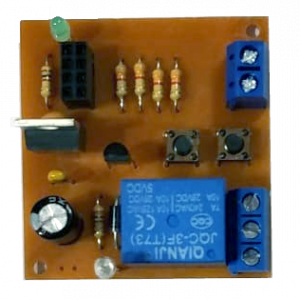
  By clicking Sign up for GitHub, you agree to our terms of service and In 10 lines of configuration, I was able to create a switch that operates that relay and thats it. Rooms can be busy so triggering with each motion event would as wasteful as it spraying every 15 minutes now. For this post though, I will use one of my MH-ET Live ESP32Minikit devices as an example, which has the device name of mhetesp32minikit. Oh and Ill be able to get off to sleep without hearing that clicking noise and troubling myself with such crazy ideas like this. Then an automation in Home Assistant is triggered. It would be useful to replicate this and allow longer intervals between sprays. Getting started is pretty easy, just install esphome using pip. I could then ensure that my devices where configured correctly and sending the right topics and messages. Defining home automation devices in YAML with ESPHome and Home Assistant, no programming required! Join me as I continue to build, work and play on this fantastic product where I enable, support and help customer create digital workplaces and #ModernIntranets. 'state_topic' and 'command_topic' MQTT topics doesn't work. I also planned to use larger batteries but will need to 3d print a housing for that so for this prototype I housed the battery discretely on the back for ease of access and space reasons. The payload that represents the available state. Each component is divided into platforms which is where different devices of that type are supported. Lets assume we have a relay connected up to a garage door openers push button (PB) input. Here is the prototype IoT air freshener with another beast mode "Alexa, freshen up the house". If set to any, payload_available must be received on at least one configured availability topic before the entity is marked as online. The payload that represents off state. #SharingIsCaring.
  An Alexa routine is created to listen for that sentence which then set the brightness level of a virtual light created in Home Assistant to a particular level. I started by saying I would not compromise on the look and feel of the unit and hopefully the above demonstrates this.
  I have some Sonoffs flashed with Tasmoda that work perfectly. By default, ESPHome will publish ON or OFF state payloads to an MQTT topic following this pattern: APP_NAME/COMPONENT_TYPE/COMPONENT_NAME/state, Example state topic: my_konnected/binary_sensor/zone_1/state, Switch zone types will respond to ON or OFF payloads published to a topic following this pattern: APP_NAME/COMPONENT_TYPE/COMPONENT_NAME/command, Example command topic: my_konnected/switch/siren/command, Did you find it helpful? If two switches have the same unique ID, Home Assistant will raise an exception. MQTT enables powerful integration with services like Node-RED, Homeseer, Domoticz and more. Now we have a basic YAML file, lets add some components to make it do something more useful. Then there are exceptions like if Im having a bath I probably dont want it to be triggered as it would mess with my Zen. Thats a lot of things you get for just a little bit of YAML! Its as simple as adding this to the bottom of your YAML file. Otherwise, the switch will wait for state confirmation from the device (message from state_topic). These are just local Git repositories so it doesnt mean they are pushed to GitHub, nevertheless Ive added a note saying that the Git repo which holds the secrets is, private and local, it is not pushed to GitHub. Thanks! The text was updated successfully, but these errors were encountered: I have the same issue with "light" topics, I also tried to add a switch but could not manage to get it working:
Was that the fundamental change, or did I miss something? Now need to add the new platform devices to that same section (dont create a second switch entry). In this mode, the switch will immediately change state after every command. Thanks! From the switch component documentation page: internal (Optional, boolean): Mark this component as internal. This switch triggers the air freshener to spray and is reset before ESPHome sends the device to sleep again. I could be wrong, but I don't think that the default ESPHome integration (which I have got to work) uses MQTT. Problem-relevant YAML-configuration entries: Additional information and things you've tried: Seems like generated code is not calling MQTTSwitchComponent::setup() To determine the switchess state result of this template will be compared to state_on and state_off. As a final note, if you need to override something from PlatformIO, for example specifying a specific version of a dependency, you can do that by creating a modified platformio.ini file in your configs dir (copy from one of your build dirs and modify as needed). Finally, we set the class of the device to motion which will set the appropriate icon in Home Assistant. Do you know how you would go about tying the fate/state of two switches together? Simply add this to the bottom of your YAML file. The unit provides some control over the frequency the air freshener sprays but this is limited to 9, 18 and 36-minute intervals. This is how you can link multiple components together on the device, then present a single device to Home Assistant (like garage remote below). Sign in The type/class of the switch to set the icon in the frontend. The relay control pin is connected to our ESP32 on GPIO pin 22. I strongly recommend that if you havent explored Home Assistant, ESPHome or ESP32 NodeMcu for tinkering you give them a try. Go ahead and toggle the switch while still tailing the log of the device and you should see it restart. As Ive written about previously, the smart side of my home automation is managed by Home Assistant, which is an amazing, privacy focused open source platform. If you want to make this visible on the main Overview dashboard, you can do so by selecting ADD TO LOVELACE. One thing thats useful to know is that platform devices with the name property set in the config will appear in Home Assistant. I don't see any "publish.mqtt" in there. Proudly powered by. I am grounding GPIO4 with the pull-up resistor, to activate the switch, but I can't figure out how to trigger an MQTT publish when the switch changes states (i.e. For those situations, Ill leave you with this. Cool, no worries Let me know if what you end up working on and if you need a hand. This is used to show device topology in Home Assistant. Valid entries are all, any, and latest. Hey Bob, yes, I definitely do want to replace it at some point and Ive also been looking at a few different platforms. So while Ive made a few jokes in this article and had lots of fun along the way, the point I want you to take away is that ideas can become reality. In the office, if my workstation is unlocked then I am likely working and the room is in-use. The config file contains different sections with core settings. Why these intervals I dont know but Im sure Airwick have their reason. The payload that represents the off state. Therefore, specifying the exact device is good and can be helpful, but its not strictly necessary. Nice one Chris, cool post. Its much safer to start your IoT device with no wifi secret and start it as AP and register it on your wifi once. Thus, you can use Home Assistant to set up scripts and react to things that happen. The second Git repo has all of my device configs and references the secrets file from the other repo. If not, you can tell esphome to tail the log by running esphome example.yaml logs. If you actually cabled this up and toggled the button in Home Assistant, the UI button turn on and you would hear the relay click on, then off, then the UI button would go back to the off state. Certainly, if ha had turned sprinklers on, expect an exorbitant water bill. However, the vast majority of my home automation devices are ESP modules running open source firmware which connect to MQTT as the central protocol. If specified, will be used for both comparing to the value in the state_topic (see value_template and state_on for details) and sending as on command to the command_topic. Sorry, your blog cannot share posts by email. Weve all most likely been into a public restroom somewhere and had the automatic air freshener trigger and possibly even make us jump out of our skin when it does. Make sure that your topic matches exactly. To provide me with the compute for this IoT project I turned to my trusted and favourite ESP32 NodeMcu board flashed with ESPHome. This is entirely wasteful and not very smart. Read about what #Geek James does that isnt #SharePoint or #Office365 related, such as #Cooking, #Photography #HomeAutomation and #IoT. When you were using ESPHome, did you have all of your logic in Home Assistant? The look and feel could not be compromised. To determine the devicess availability result of this template will be compared to payload_available and payload_not_available. A link to the webpage that can manage the configuration of this device. Thats it! When the motor is no longer powered the gearing reverses from the return force of the nozzle of the can of compressed air freshener. The terminal should now be automatically tailing the log of the device (we enabled logger in the config). The above example shows the new and modern way, For hass, its nothing too complex, just a deployment, replicaset and service in a namespace with an ingress. The maximum QoS level of the state topic. Wow I had no idea we had this easy a framework for HomeAssistant to make ESP32 devices work easier. In general its not advised to store any form of credentials on external services such as github. One thing I have noticed with Alexa routines is that Ive always had to keep the wake sentences short and not complex in order for them to be picked up by Alexa. In this example, the topics are prefixed with home. Lets create the Git repo and secrets file, replacing the details below with your own. When using MQTT, the channels are set with retain flag, so that the devices themselves and their last known states are not lost on reboots (you can disable this for testing). Id like to link the LED and the fan together so that the LED ALWAYS correctly shows the state of the fan. I THINK the .yaml in HA is sound, but not 100% about that either. Can be either an HTTP or HTTPS link. The MQTT topic subscribed to receive a JSON dictionary payload and then set as sensor attributes. Must not be used together with availability_topic. Ive likely fallen asleep as this stage and forgotten about the crazy idea, but clearly this one time I didnt, so here I am writing about how to IoT Airwick air fresheners. document.getElementById( "ak_js_1" ).setAttribute( "value", ( new Date() ).getTime() ); 2022 Just another Linux geek. Sign up for a free GitHub account to open an issue and contact its maintainers and the community. this is the previous/old example: A list of MQTT topics subscribed to receive availability (online/offline) updates. There is pretty good documentation online though. But we could use motion in combination with when the air freshener last sprayed to ensure it only sprays every 30 minutes for example. Hopefully you can see just how easy it is to add things to your ESP device and have them show up in Home Assistant. Even if youre using a private repository, theres still potential for leaking them or getting them stolen. Manually you can set pin 13 to high with mosquitto_pub or another MQTT tool: The configuration will look like the example below: The MQTT Switch integration was introduced in Home Assistant 0.7, This could also prevent them from working when in night mode but there is, of course, one the exception to that, the bathroom! I planned to use a smaller ESP32 dev board but for this prototype, Ive opted to use the standard board for ease of access. true if no state_topic defined, else false. After it reboots, you should see the new temperature and humidity inputs under devices in Home Assistant. Tried ESPHome to control sprinklers. We can do all of this easily on the device with ESPHome and preset a single button to Home Assistant. Otherwise, the initial state of the switch will be unknown. ESPHome not recommended for critical apps. Let your mind run away and be creative. Thats beyond the scope of this particular post though, as I really wanted to introduce ESPHome and show how you can easily manage devices and integrate them with Home Assistant. You would need a way to control the fans, probably via pulse-width modulation, and connect the controller to something like home assistant. Once the device is running and connected to WiFi you can use OTA. For me, the data is as much fun to play with and analyse as the tinkering with all the hardware. All we need to do is connect them up to appropriate GPIO pins and define them in the YAML. I also have an LED which shows the state of the fan. The Airwick air freshener device is pretty discrete. Defines a template to extract devices state from the state_topic. (If you want to give it a try, you can run the command esphome example.yaml wizard which will create an example.yaml file.). Of course its probably a good idea to push your Git repo somewhere remote, perhaps even share your configs with others! there is a fr esphome/feature-requests#600 you can upvote or propose other options, MQTT state/command topics not working on 'switch' component. Should be able to, so you want the LED to reflect the state of the relay? Room based triggers. However, the template switch which uses the relay has a name is and it has an action which causes the relay to be turned on and off, emulating a button press. Loops, initialising and managing multiple inputs and outputs, reading and writing to I/O, PWM, functions and callbacks, connecting to WiFi and MQTT, hosting an AP, logging and more is taken care of for you. I also added a beast mode "Alexa, it's stinky" for the smelly occasions https://t.co/mXOLggX31w#homeautomation #smartbuildings pic.twitter.com/Rc9VWeYxVG. In the living room, if the TV is on or the sofa is occupied then the room is in-use. Once it is flashed, the device is automatically rebooted. Alarm state. If needed, pulling the pin down is easy, just set the default mode. The air freshener will last longer and because I converted the batteries I can recharge them. I know I can do this in automations on either the HA side or the ESPHome side but whats the most foolproof/efficient way to do it? ESPHome on the Konnected Alarm Panel (ESP8266), ESPHome on the Konnected Alarm Panel Pro (ESP32). You can leave some of these settings out, such as api, which will disable that feature on the device (esphome is required). Any question, i need control the 5 fans for my Rack home lab, is possible with ESPHOME?? Including dealing safely with comms breakdowns. The run command actually does a number of things, include sanity check, compile, flash and tail the log. If windows are open then Id rather have the fresh air than the air freshener so dont have them spray. An MQTT topic subscribed to receive availability (online/offline) updates. I placed it right before App.setup(). Identifier of a device that routes messages between this device and Home Assistant. No, Modified on: Sat, 6 Mar, 2021 at 7:03 PM. Once up, the devices support mDNS and unencrypted over the air updates (which is fine for my local network). For example, for this I started with Alexa, it is stinky in here but her response would be Sorry, I dont know that one. I wont go through all of the different automations I have created to work with my new-fangled smart IoT air fresheners but instead, Ill show you an example that in part is the most applicable for an air freshener. Flag which defines if the entity should be enabled when first added. Under ESPHome we can use the binary_sensor component with gpio platform. ESPHome automatically looks for this file when compiling firmware for a device and will use those variables. In an inclusive world, voice assistants are increasingly used to perform tasks that ordinarily might have been out of reach for some people. Konnected hardware can integrate with any platform that speaks MQTT by leveraging the ESPHome firmware. Warn name less components when internal is not set to true. After the device reboots, we should now see the new Garage Door Remote in the UI. Thanks for sharing, youve given me lots of ideas to try at my place. Step into my Internet of Things world where I share information about my #SmartHome, Home Assistant and other IoT projects. To enable this switch in your installation, add the following to your configuration.yaml file: The configuration format of manual configured MQTT items has changed. Under Config is a name (Unit Name:) set for your device (here its bathroom). It doesn't seem to work with me. What I dont like is how they continue to work when Im not in the room and even not in the house. My professors at the School of YouTube are letting me down on this one. A configuration for a Controller for MQTT with the protocol OpenHAB MQTT is present and the entries (Controller Subscribe: and Controller Publish:) are adjusted to match your needs. Once that worked I set up the sensors in configuration.yaml. Resolving mDNS across VLANs with Avahi on OpenWRT, Custom WiFi enabled nightlight with ESPHome and Home Assistant, Using a dynamic libvirt inventory with Ansible, Joining a bridged IRC network on Element (Matrix), Swift object storage clusters with Ansible, Automatically enable and disable WiFi based on Ethernet connection with NetworkManager, Flashing OpenWRT onto Ubiquiti UniFi AP AC, How to create VLAN trunks and access ports for VMs on Linux bridges using NetworkManager (and have them talk), Rootless podman containers under system accounts, managed and enabled at boot with systemd. For now at least! An Alexa routine is created to listen for that sentence which then set the brightness level of a virtual light created in Home Assistant to a particular level. I started by saying I would not compromise on the look and feel of the unit and hopefully the above demonstrates this. I have some Sonoffs flashed with Tasmoda that work perfectly. By default, ESPHome will publish ON or OFF state payloads to an MQTT topic following this pattern: APP_NAME/COMPONENT_TYPE/COMPONENT_NAME/state, Example state topic: my_konnected/binary_sensor/zone_1/state, Switch zone types will respond to ON or OFF payloads published to a topic following this pattern: APP_NAME/COMPONENT_TYPE/COMPONENT_NAME/command, Example command topic: my_konnected/switch/siren/command, Did you find it helpful? If two switches have the same unique ID, Home Assistant will raise an exception. MQTT enables powerful integration with services like Node-RED, Homeseer, Domoticz and more. Now we have a basic YAML file, lets add some components to make it do something more useful. Then there are exceptions like if Im having a bath I probably dont want it to be triggered as it would mess with my Zen. Thats a lot of things you get for just a little bit of YAML! Its as simple as adding this to the bottom of your YAML file. Otherwise, the switch will wait for state confirmation from the device (message from state_topic). These are just local Git repositories so it doesnt mean they are pushed to GitHub, nevertheless Ive added a note saying that the Git repo which holds the secrets is, private and local, it is not pushed to GitHub. Thanks! The text was updated successfully, but these errors were encountered: I have the same issue with "light" topics, I also tried to add a switch but could not manage to get it working: